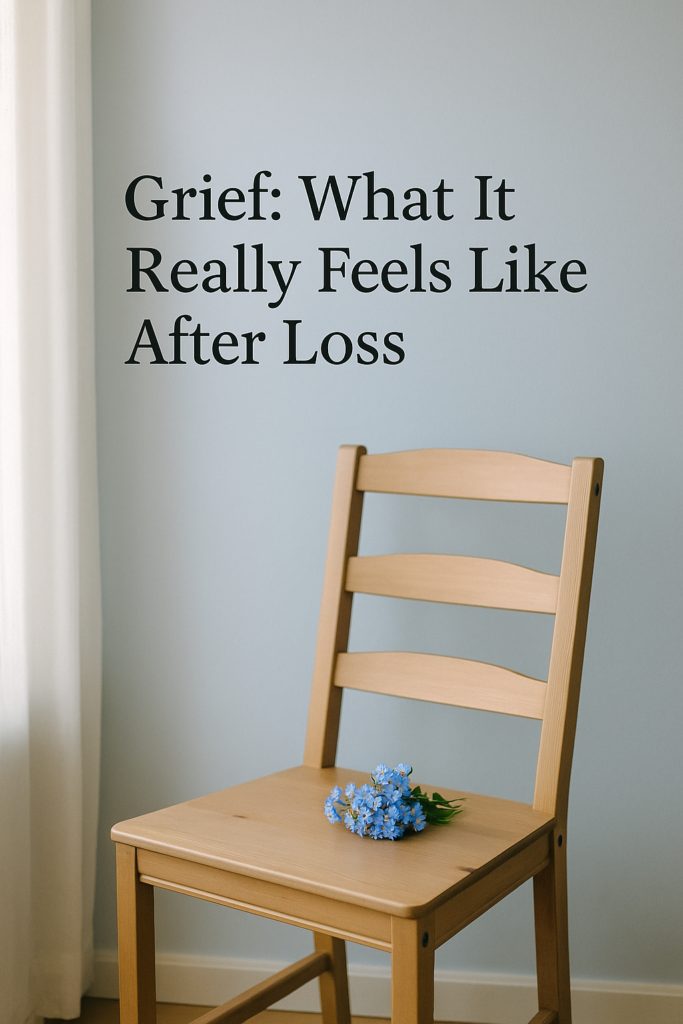
Most people mean well when they say it gets better.
They’re trying to offer reassurance. Hope. A sense that the pain won’t always feel this heavy.
But after loss, those words often land wrong.
Not because you don’t want things to get better, but because “better” can feel like moving forward when part of you is still standing in the place where you lost them. It can feel like leaving something behind before you’re ready. Like stepping away from the last place where they still feel close.
In early grief, there is often a quiet, irrational belief that if you stay right there long enough, something might change. That if you don’t move, if you don’t improve, if you don’t let things get “better,” the bond remains intact. Saying it gets better can sound like pressure to move on before you’re ready to accept that the person you lost isn’t coming back.
That fear isn’t weakness.
It’s longing.
People often say it gets better because they want to help. They don’t know what else to say in the face of something they can’t fix. Sometimes, they need to believe it themselves.
This isn’t about bad intent.
It’s about a mismatch between language and lived experience.
“Better” implies a destination. A timeline. A point you’re supposed to reach. And when nothing feels better yet, those words can make people panic. They start to wonder if they’re stuck. If they’re grieving wrong. If this pain is permanent.
What’s often happening instead is that grief is doing what grief does.
Grief doesn’t erase meaning. It breaks the one you were living inside. What follows is a slow search to understand what happened, why it happened, and what it means to go on afterward. That search takes time, and it doesn’t move in a straight line.
In this stage, reassurance doesn’t help.
Understanding does.
What people often need instead is permission to not know yet. To not improve on demand. To stay where they are without being rushed toward a future they can’t imagine living inside yet. And to have time to search for meaning, both in what has already happened and in what life might look like now.
Better is a word that belongs to later.
Grief lives in now.
And when you’re still trying to understand what has changed, hope doesn’t come from promises. It comes from having language for what you’re experiencing and knowing that what you’re feeling makes sense.
Understanding why those words don’t help can be enough. You don’t need to correct them or explain yourself in order to keep going.